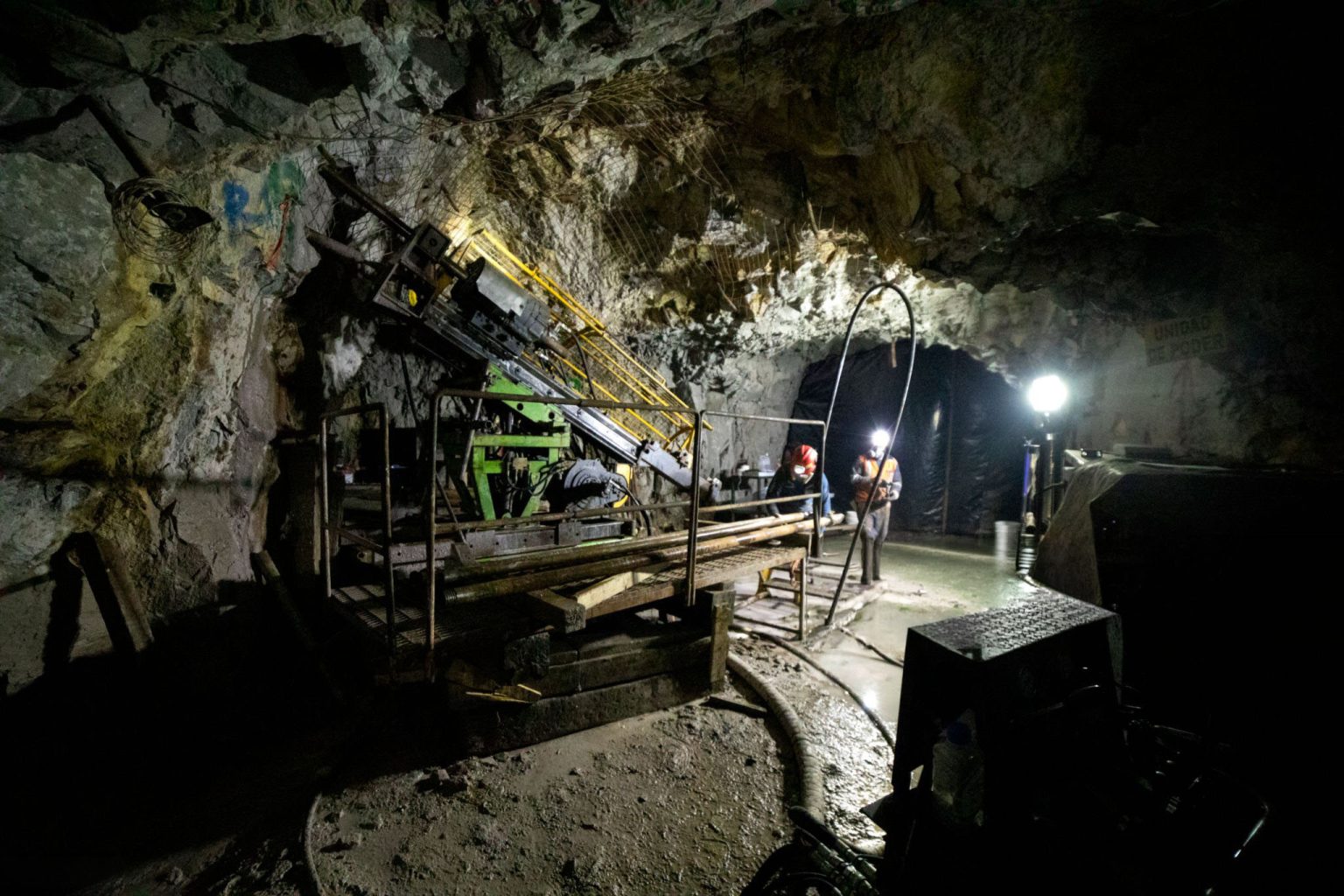
- Setting
- Urban excavation
- Challenge
- Fractured rock
- Approach
- Integrated system
- Outcome
- Staged execution
An Australian exploration site needed high-confidence, three-dimensional in situ stress data at depth, without the time or access constraints of underground excavation. Using the ANZI strain cell and a wireline-enabled overcoring system, SCT delivered multiple reliable measurements from surface boreholes approaching 1km deep, in a one-day operation.
A progressive development cycle process was directly incorporated into the modelling solution scheme which was configured to assume utilisation of conventional roadheader mining machinery. This importantly ensured derived outputs produced during simulation accurately followed the stress and rock failure pathways that are expected to occur in the real world.
Output from the model identified the height of fracturing to be within the zone controlled by the primary rock and cable bolting system. Where appropriate our 3D roadway development simulations can be numerically applied towards the optimisation of reinforcement placement studies and/or exploring the potential impacts of alternative development cycle arrangements – therefore making them particularly relevant to the civil, underground hard-rock and coal mining industries.
“We started with measurement. Piezometers went in to track water movement through the fractures. Extensometers measured ground movement as excavation deepened.
The data came back clean and fast. But data alone doesn’t decide.”
The site sat in dense urban terrain where fractured rock and unpredictable water made every meter down a question. The design assumed one thing. The ground delivered another. SCT was brought in when the early excavation hit conditions that didn’t match the investigation. The decision was simple but costly: stop, understand, or push forward and risk it.
We started with measurement. Piezometers went in to track water movement through the fractures. Extensometers measured ground movement as excavation deepened. The data came back clean and fast. But data alone doesn’t decide. We modelled what the measurements meant—how water would flow, where stress would concentrate, what the fractured rock would do under load. Then we investigated further, drilling into the uncertainty, sampling where the model said conditions would shift.
The three pieces connected. Measurement showed what was happening. Modelling showed what it meant. Investigation confirmed the mechanism. From that, the engineering judgement was clear: excavation could continue, but with staged support and active monitoring. The contractor knew exactly what to watch for and when to stop.
The shaft went down on time. No surprises. No unplanned delays. The ground behaved as predicted because we understood it before we asked it to carry load. That’s what happens when measurement, modelling, and investigation work as one system, not separate tasks.
The learning stayed with the team. Future phases used the same approach. Uncertainty became manageable. Decisions became confident.